Using Data to Drive JEDI Efforts: The pipeline between high school, technical college & 4-year universities
The MS in Educational Psychology – Learning Analytics program is proud to present its second annual Committed Scholars Program webinar. Organized by the program’s scholarship recipients, this year’s session features a candid conversation about implementing data-driven JEDI (justice, equity, diversity, inclusion) practices at three different stages in the education trajectory. We will discuss how each project/institution uses data to inform their JEDI curricula and initiatives. Guest speakers include:
- Richard Halverson, UW Madison Professor and Kellner Family Distinguished Chair in Urban Education
- Percival Matthews, UW Madison School of Education Associate Dean for Equity, Diversity, and Inclusion
- Tammi Summers, Vice President of Diversity, Equity, Inclusion at Gateway Technical College
This session will be moderated by the Committed Scholars Program scholarship recipients.
February 23, 12-12:30 CST

Richard Halverson
Professor and Kellner Family Distinguished Chair in Urban Education at UW-Madison
Richard Halverson is the Kellner Family Chair of Urban Education and Professor of Educational Leadership and Policy Analysis in the UW-Madison School of Education. His research aims to bring the research methods and practices of the Learning Sciences to the world of educational leadership and interactive media. Rich is a co-director of the Comprehensive Assessment of Leadership for Learning and leads the Wallace Foundation Equity-Centered Leadership research project. He is a former high school teacher and administrator, and earned an MA in Philosophy and a PhD in the Learning Sciences from Northwestern University. He is co-author (with Allan Collins) of Rethinking Education in the Age of Technology: The Digital Revolution and Schooling in America and (with Carolyn Kelley) of Mapping Leadership: The Tasks that Matter for Improving Teaching and Learning in Schools.
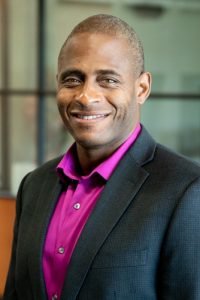
Percival Matthews
School of Education Associate Dean for Equity, Diversity, and Inclusion at UW-Madison
Dr. Matthews is also an Associate Professor in the Department of Educational Psychology. His research is on human mathematical cognition with hopes of finding effective applications to pedagogy. He studies mathematical cognition with two primary goals: 1) to understand some basic underpinnings of human cognition, and 2) to find ways to leverage this understanding into effective pedagogical techniques that can be used to impact the life chances of everyday people. Dr. Matthews’ research currently consists of three interrelated strands: 1) investigating children’s understanding of the equal sign; 2) investigating how humans imbue symbolic numbers with a sense of magnitude 3) examining how alternative representations of to-be-learned content can affect learning and transfer of that content.
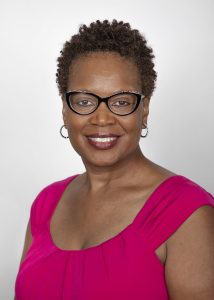
Tammi Summers
Vice-President of Diversity, Equity and Inclusion at Gateway Technical College
Dr. Tammi Summers is the Vice-President of Diversity, Equity and Inclusion at Gateway Technical College and has also served in several other administrative positions including Director of Student Support and Dean of Learning Success. She is a 28-year active member of Alpha Kappa Alpha Sorority, Inc., where she volunteers and gives to projects in the areas of education, mental health, voting, and academic scholarships. Recently Dr. Summers was selected to represent Gateway Technical College, as well as the Racine and Milwaukee communities by serving on the YWCA Southeastern Wisconsin Board of Directors. She holds a doctorate degree from the University of Wisconsin-Milwaukee in Urban Education focusing on Adult and Continuing Education.
The Committed Scholars Program
The Committed Scholars Program (CSP) seeks to address inequities in education by supporting graduate students throughout and after completion of their MS in Educational Psychology – Learning Analytics program. The CSP will build Scholar-leaders who are committed to working with diverse populations and tackling education achievement gaps. These types of challenges include the persistent disparity in academic performance or educational attainment between different groups of students, such as white students and minoritized students, or students from higher-income and lower-income households. These Scholars will engage in capacity-building activities that contribute to their own, and their graduate student cohort’s, educational and occupational development and success. The CSP aims to attract Scholars with high potential who aspire to become culturally responsive leaders in their chosen learning analytics-related field. As such, the program is open to Scholars from various professional backgrounds who are committed to increasing the representation and success of underserved and historically underrepresented populations in education. Up to 2 scholarships will be awarded within each cohort.
Current Recipients
 Christina Huynh, University of Washington
Christina is an Academic Advisor at the University of Washington, Allen School of Computer Science and Engineering. In her current role, she works with first generation, underrepresented minority, and low income students who are pursuing a degree in computer science or engineering. She received her bachelor’s degree in Applied Mathematics from UC San Diego and has spent her post undergraduate years working in a variety of educational settings ranging from primary education to higher education. As part of the Learning Analytics program, she hopes to be proactive in the approach to student success.
 Karissa Ebert, MiRegistry
Karissa Ebert graduated from the University of Wisconsin-Madison in 2020 with a Bachelor of Science in Rehabilitation Psychology and a certificate in Gender and Women’s Studies. While at UW-Madison, Karissa participated in research with the Learning, Cognition, and Development (LCD) Lab. This research focused on memory development and testing-effect in children ages 3-7. Karissa currently works as a Data Verification Specialist with MiRegistry, an organization that works to support early childhood educators in terms of their professional development and education. Her passion lies in finding how children can best be set up for success by their teachers, and in turn, how teachers can be supported by the institutions that govern and surround them. As part of the Learning Analytics program, Karissa hopes to learn how to use data analytics to invoke small and large-scale change on a systems level. She also aims to expand her knowledge on how to best advocate for and support early childhood educators, especially those who hold marginalized identities.
 Jay Winston, iCU Learning
Jay currently serves as the Chief Learning Officer for iCU Learning and is a pioneer, advocating for the adoption of learning analytics methodologies in corporate spaces so teams and organizations can truly measure the impact of learning. Jay’s passion for equity and their purpose as an educator has allowed them to spend the last decade working in Madison’s health care industry designing, developing, delivering and evaluating training/learning programs that advance diversity, equity, and inclusion, talent development, and workforce development initiatives. Jay’s journey as a trainer has connected them to the world of data where they generate actionable data that improves the effectiveness of learning programs, determine the ROI of learning programs, and better link learning to the development of one’s organization.
 Mary Xiong, Gateway Technical College
Mary Xiong Thao is the Title III Grant Student Success Programming Coordinator at Gateway Technical College. She has spent her career focusing on education as a means to strengthen and move communities from poverty to prosperity. In her current role, she uses data to dissect and improve student retention for underserved populations. This includes training faculty on improving their teaching methods, systematizing the college’s non-cognitive assessment to help staff and students improve vital touch points, and creating and leading a sustainable work-based learning ecosystem. In addition, Mary provides consultation to non-profit organizations and institutions on culturally competent work practices. By participating in the Learning Analytics Program, she plans to continue to forge more effective, intentional and equity minded strategies for students, their learning, and the academic environment at all levels of the college. Simultaneously, she believes this will help her in her life’s work of providing the best chances for all people to live a life of prosperity.

The MS in Educational Psychology – Learning Analytics program is a convenient, fully online graduate program offered through the Department of Educational Psychology in the School of Education at the University of Wisconsin-Madison. In just two years, working professionals can learn balanced analytical methods, design strategies, and communication skills in the 7-course curriculum. Students work with a world-class teaching team to perform and present analyses, work to improve educational outcomes in a range of learning environments, and collaborate with students in the cohort and build professional relationships. Housed in the #1 ranked Department of Educational Psychology in the nation (as listed in the 2023 rankings by U.S. News & World Report’), please contact the program’s director, Julia Rutledge, for more information: jrutledge@wisc.edu
WWW.LEARNINGANALYTICS.EDUCATION.WISC.EDU
